Analysis / By the numbers
Retracted systematic reviews. When synthesis fails
The systematic review is one of the most reliable formats in the evidence base, but it is not infallible. At least 964 are flagged as retracted. They are few, 0.14% of the total, but they teach a lot about how synthesis can fail and how to protect yourself.
A systematic review is supposed to be among the most reliable things science can offer on a question. It brings together all the evidence and appraises it with a method. But not even this format is safe from error or fraud. This post looks at retracted systematic reviews, that is, reviews officially withdrawn by the journal because their conclusions do not hold up. There are few of them, but they are worth a look, because they show how evidence synthesis can fail.
How many systematic reviews have been retracted
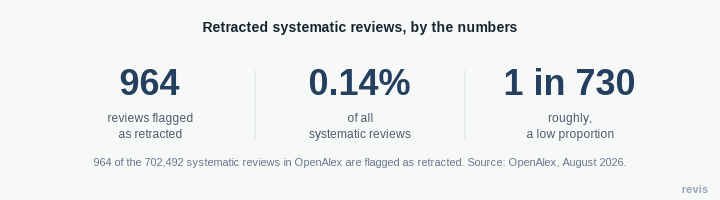
According to OpenAlex, at least 964 works with "systematic review" in the title are flagged as retracted. Against the more than 700,000 the database records on that criterion (a title-based count that lets in some false positives, such as protocols), that is 0.14%, roughly one in 730. It is a low figure. The vast majority of reviews are never retracted, so there is no reason to distrust the format. But it is not zero, and that matters when your work rests on one of them.
A little above average
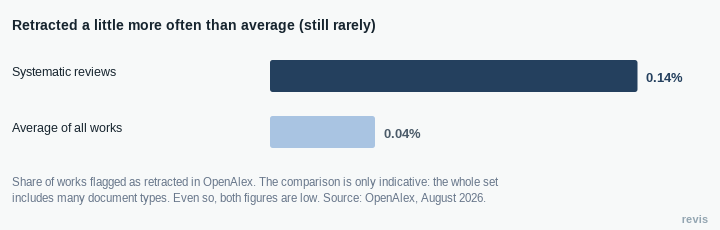
Systematic reviews are retracted at a somewhat higher rate than the literature in general. Across OpenAlex as a whole, the retraction rate is around 0.04%, while for systematic reviews it rises to 0.14%, about three times higher. Take that comparison with caution. The overall set includes many document types (datasets, materials, notes) that are almost never retracted and pull the average down, so a fairer comparison would be against the rate for other articles. Even with that caveat, the signal is that the format is not immune to the problem.
Why a review gets retracted
A systematic review can fall for several reasons, and not all of them are its authors' fault.
- Fraudulent primary studies. If a review includes trials with fabricated data that are later retracted, its results are affected even if the review's own method was flawless.
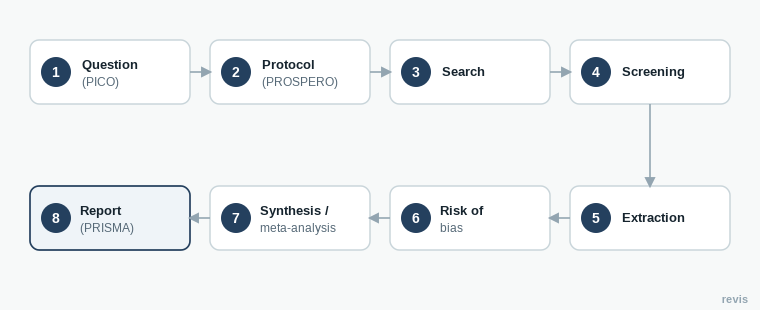
- Methodological errors. Flaws in the search, the extraction or the statistical analysis that invalidate the conclusions. The failure often starts earlier than you might think. When we read the stated aims of the 368 retracted systematic reviews in PubMed, 42% did not even say what they set out to do, against 97.7% of Cochrane reviews that did. A clear question, built with a framework such as PICO or one of the other research question frameworks, is the first safeguard. The three flaws recur, and we classify them in our analysis of how 2,368 published reviews frame their question.
- Overlap or plagiarism. Reviews that copy others or reuse material without saying so.
- Undeclared conflicts of interest that bias the interpretation.
The first reason is the hardest to prevent. A systematic review can be compromised if it relies on a study that is later retracted, even when the review itself is well done. That does not mean a retraction automatically contaminates everything that cites it, but anyone who used those data should check whether their conclusions still hold without them.
How to protect yourself when doing or reading a review
The good news is that there are concrete ways to reduce the risk, and they are part of good method.
- Check for retractions. Before including a study, confirm it has not been retracted. Retraction Watch and publishers' own notices help.
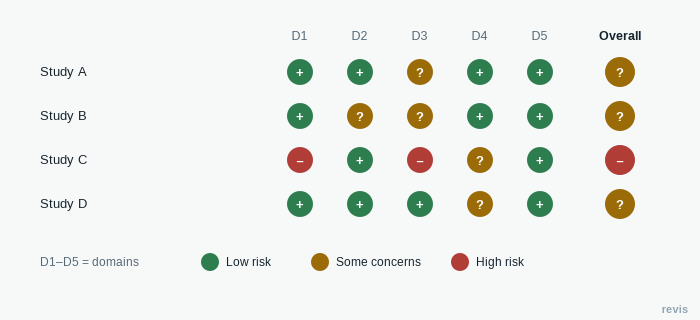
- Assess the risk of bias. A rigorous risk of bias assessment catches many problematic studies before they do damage.
- Take care over extraction. Faithful, verifiable data extraction, with the source quote in front of you, keeps errors in the primary studies from flowing into your synthesis.
- Look twice at results that are too neat. In a messy field, a surprisingly clean conclusion is a reason to check the source carefully, a problem linked to the overproduction of reviews.
Making sure no data point slips through unchecked is at the heart of revisia. Every extracted data point carries its quote alongside, or a flag if it has none, so you can check the source in seconds, and you validate every decision. Create your free account.
What retracted reviews teach us
Nine hundred and sixty-four retracted reviews out of seven hundred thousand is not an epidemic, but it is not a footnote either. It is a reminder that rigor has to be looked after at every step, from the studies that go in to the extraction of their data and the conclusions. A systematic review is only as strong as its weakest point. That is why it pays to check each stage rather than trusting everything to the "systematic" label.
Want a review that stands up to scrutiny? In revisia you screen with AI and verify with the quote alongside, from start to finish. Create your free account and try it.
Frequently asked questions
How many systematic reviews have been retracted?
At least 964, according to OpenAlex, out of the more than 700,000 the database records. That is 0.14% of the total, roughly one in 730. It is a low proportion. The vast majority of systematic reviews are never retracted.
Are they retracted more often than other studies?
The retraction rate of systematic reviews (0.14%) is about three times the average for the literature as a whole in OpenAlex (0.04%). The comparison is only indicative. That set includes many documents that are almost never retracted and pull the average down, so a fairer comparison would be against the rate for other articles.
Why does a systematic review get retracted?
It can happen because it includes primary studies that later turn out to be fraudulent, because of methodological errors in the search, extraction or analysis, because of plagiarism or duplication, or because of undeclared conflicts of interest. The hardest case to prevent is fraudulent primary studies, which can compromise an otherwise well-conducted review.
How do I know whether a review or its studies have been retracted?
Check databases such as Retraction Watch and publishers' retraction notices, which flag withdrawn work. When doing your own review, check the status of each study before including it and keep a traceable data extraction, with the source quote, so you can redo the analysis if a study falls.
At least 964 systematic reviews have been retracted, about one in 730. Some fall because they included fraudulent studies, even when their own method was sound. How to protect yourself.
via revisia